Emergency triangle placement: Best practices for truck drivers

By The Schneider Guy
Estimated reading time: 2 minutes
Stopping on a highway or highway shoulder can create a challenging situation, especially if the road is winding, it’s dark outside or there is poor visibility due to weather conditions. The more visible you and your truck are during an emergency stop, the safer everyone on the road will be, including you.
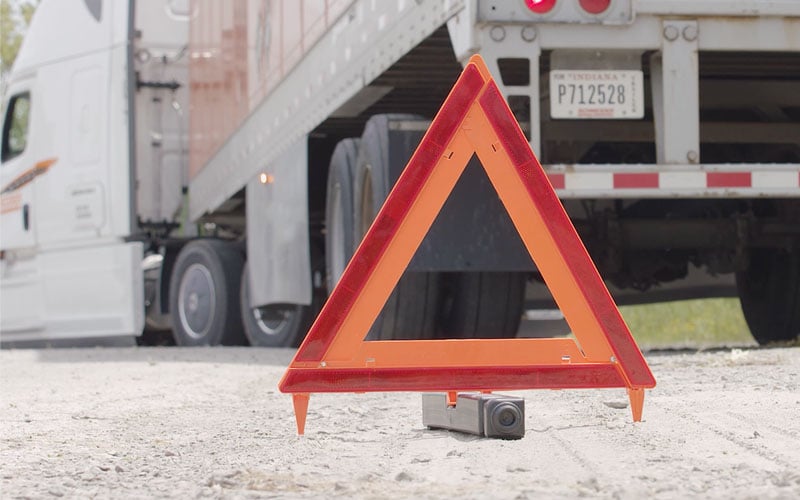
This is where emergency triangles come in. These reflective devices are placed on the road around your vehicle to warn other drivers that you are stopped ahead.
Schneider believes in providing thorough training, which is why skills like these are covered in both our paid CDL training program and new driver orientation. Keep reading to learn about where to place emergency triangles and how to do it safely.
How to set up emergency triangles
Here's how to safely exit the vehicle and set up emergency triangles:
1. Turn on your four-way flashers.
This should be the first thing you do when you stop on the side of the highway, as it increases your vehicle's visibility to oncoming traffic.
2. Put on reflective gear.
Put on the proper safety gear, like a reflective vest, before you start placing triangles.
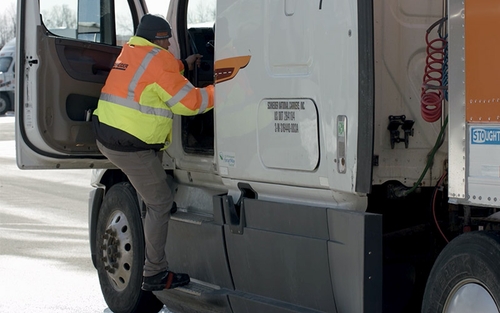
3. Exit the vehicle.
Exit your vehicle from the side closest to the shoulder of the road to stay as far away from traffic as possible.
4. Place your triangles.
Some general steps to follow when placing triangles include:
- Place your triangles within 10 minutes of stopping.
- Use all three of your required emergency triangles.
- Place them with the reflective side facing oncoming traffic.
- Ensure the bottom weight of each triangle is turned correctly, so it does not tip over.
Where are emergency triangles placed?
Triangle placement varies based on the location a driver stops. Regardless, triangles should be spaced out to ensure other motorists can see the stopped truck from a distance that still allows for a changing of lanes or a slowing of speed.
The following are some of the most common emergency triangle placements for truck drivers:
How to place triangles on a two-way road
When stopped on a two-way road, the placement of your triangles should take into account traffic coming from both directions. As a result, one of your triangles should be placed in front of your vehicle to warn oncoming motorists.
Here's how to place triangles on a two-way road:
- One triangle 100 feet in front of the vehicle, centered in the lane the vehicle occupies.
- One triangle 10 feet behind the vehicle on the traffic side of the vehicle.
- One triangle 100 feet behind the vehicle in the center of the lane the vehicle occupies.
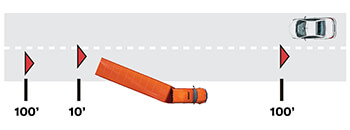
Watch a live demonstration of how to place emergency triangles on two-way roads.
How to place triangles on divided highways and one-way roads
When stopped on the shoulder of a one-way road or a four-lane divided highway, there is less concern about motorists seeing you from the front, as everyone comes from one direction. This means you should place all three triangles behind your vehicle.
Here’s how to place triangles on a divided highway or one-way road:
- One triangle 10 feet behind the vehicle on the traffic side of the vehicle.
- One triangle 100 feet behind the vehicle in the center of the lane the vehicle occupies.
- One triangle 200 feet behind the vehicle in the center of the lane it occupies.
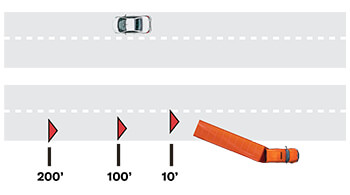
Watch a live demonstration of how to place triangles on divided highways and one-way roads.
How to place triangles with an obstructed view
Placing emergency triangles when stopped on a hill or on the side of a road that curves has its own set of guidelines, due to the possibility of oncoming motorists having less visibility. In these kinds of locations, emergency triangle placement should be a further distance than in other situations.
Here’s how to place triangles with an obstructed view:
- Place one triangle at least 100 feet ahead of the vehicle.
- One triangle should be placed 10 feet behind the vehicle on the traffic side of the vehicle.
- Move the rearmost triangle between 100 feet and 500 feet back down the road to provide ample warning (the maximum distance from the vehicle should not exceed 500 feet).
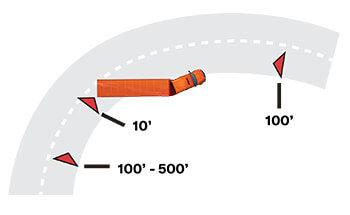
Watch a live demonstration of how to place triangles with an obstructed view.
Emergency triangle placement key takeaways
- Emergency triangles can make your truck more visible to other drivers during emergency roadside stops.
- Use all three triangles and place them according to road type. Different placements may apply for two-way roads, divided highways and obstructed views.
- Position triangles within 10 minutes of stopping, to increase your vehicle's visibility to oncoming traffic as soon as possible.
- Understanding proper emergency triangle placement helps truck drivers meet regulatory guidelines and stay safe.
Want even more helpful driving tips?
Learn even more useful driving information by reading more of our blogs.
Schneider Guy loves the "Big Orange." He's passionate about the trucking industry and connecting people to rewarding careers within it. He's been the eyes and ears of our company since our founding in 1935, and he's excited to interact with prospective and current Schneider associates through "A Slice of Orange."